夢想神傳重信流について
About Musō Shinden Jūshin Ryū
At our dōjō, we practise Musō Shinden Jūshin Ryū. The formal name of the school is “Hayashizaki Iaijutsu Heihō Musō Shinden Jūshin Ryū”; however, nowadays, the art is widely known as “Musō Shinden Jūshin Ryū” or simply shortened to “Jūshin Ryū” (an alternative reading of the characters for the founder’s name “Shigenobu”). This ryūha boasts a long history, tracing its roots back almost 500 years to Hayashizaki Jinsuke Minamoto no Shigenobu, the man known as the founder of iai.
The founder of our school, Hayashizaki Jinsuke Minamoto no Shigenobu (Jūshin), was born as Asano Tamijimaru in the 11th year of the Tenbun era (1542). He was born in Hayashi Village in the Tateyama Region of Dewa Province (modern-day Murayama City, Yamagata Prefecture). When he was 5 years old, his father, Kazuma, was murdered by Sakagami Shuzen, and his family was thrown into strife. Tamijimaru swore to avenge his father’s death, and he devoted himself to training in the martial arts.
At 14 years old, he spent 100 days training in earnest at the Hayashizaki Myōjin Shrine, dedicated to honing his swordsmanship. One night, the deity of the shrine came to him in a dream and is said to have taught him the innermost secrets of drawing the sword and cutting in one swift motion. This was the start of iai and is where the school gained its name: Musō Shinden Jūshin Ryū [Jūshin style transmitted by the gods in a dream].
Amongst the teachings passed on by the deity of the shrine was Kesa no Hitotachi:
“Do not draw your sword; do not force others to draw their swords. Do not cut others; do not force others to cut you. Do not kill others; do not be killed by another. Even if you encounter the gravest of sinners, you should offer sermon and steer them onto the righteous path. Should they not heed one’s sermon, apply Kesauchi without hesitation and unite them with Buddha.”
This concept forms the core of our school and is present through the techniques. In the 4th year of the Eiroku era (1561), he made his way to the then capital of Kyoto and found Sakagami Shuzen in hiding. Using the iai skills he had perfected, he successfully avenged his father and spent the rest of his life traveling Japan to hone his skills further.
From the iai Jūshin sensei was taught by the deity of the shrine, countless masters and new sword schools have branched out throughout the generations, such as Tamiya Ryū, Muraku Ryū, Ichi(no)miya Ryū, Sekiguchi Ryū, Hōki Ryū and more. Jūshin sensei’s iai eventually made its way to the Tosa Domain in the Bunsei era (1818–1830), but to ensure its correct, unaltered transmission, the art was taught in secret.
The art maintained its unbroken line of transmission, and in 1916, a man known as “The Last Martial Artist”, Nakayama Hakudō sensei, was introduced by famous political leader Itagaki Taisuke to the 17th generation master of Jūshin Ryū, Hosokawa Gishō sensei: a man renowned for not accepting students. Nakayama sensei was already a master of multiple arts, but he was desperate to learn from the man Itagaki Taisuke referred to as “without equal”. Despite being an outsider to the Tosa Domain, Nakayama sensei was accepted as Hosokawa sensei’s direct student, with the two visiting each other for one-to-one training multiple times a year. Nakayama sensei would later receive complete transmission, and we can still see a piece of his calligraphy dedicated to the Hayashizaki Myōjin “Iai” Shrine signed “Nakayama Yūshin Hakudō, 18th generation of Shinden Jūshin Ryū, direct lineage of Hayashizaki sensei”.
Nakayama sensei would later teach Jūshin Ryū to Kimura Eiju sensei of Yamaguchi Prefecture. As he had done with Hosokawa sensei, Nakayama sensei and Kimura sensei would visit one another throughout the year, with Kimura sensei sometimes spending weeks training one to one with Nakayama sensei. However, fearing the art would die out after generations of limited transmission, Nakayama sensei instructed Kimura sensei to start teaching Jūshin Ryū openly in line with the changing modern times to ensure its survival. After Nakayama sensei passed away, Kimura sensei dedicated the rest of his life to teaching the school. In 1974, Kimura sensei would hold the “First Musō Shinden Jūshin Ryū Research Seminar”, the first seminar on the school ever to be held, bringing it into the modern era. After Kimura sensei passed away, his legacy was continued by his three direct students: his son, Kimura Shigeki sensei; Nukata Hisashi sensei; and Hashimoto Masatake sensei. Thanks to the dedication of these three sensei, the school flourished and has spread throughout Japan.
The founder of our school, Hayashizaki Jinsuke Minamoto no Shigenobu (Jūshin), was born as Asano Tamijimaru in the 11th year of the Tenbun era (1542). He was born in Hayashi Village in the Tateyama Region of Dewa Province (modern-day Murayama City, Yamagata Prefecture). When he was 5 years old, his father, Kazuma, was murdered by Sakagami Shuzen, and his family was thrown into strife. Tamijimaru swore to avenge his father’s death, and he devoted himself to training in the martial arts.
At 14 years old, he spent 100 days training in earnest at the Hayashizaki Myōjin Shrine, dedicated to honing his swordsmanship. One night, the deity of the shrine came to him in a dream and is said to have taught him the innermost secrets of drawing the sword and cutting in one swift motion. This was the start of iai and is where the school gained its name: Musō Shinden Jūshin Ryū [Jūshin style transmitted by the gods in a dream].
Amongst the teachings passed on by the deity of the shrine was Kesa no Hitotachi:
“Do not draw your sword; do not force others to draw their swords. Do not cut others; do not force others to cut you. Do not kill others; do not be killed by another. Even if you encounter the gravest of sinners, you should offer sermon and steer them onto the righteous path. Should they not heed one’s sermon, apply Kesauchi without hesitation and unite them with Buddha.”
This concept forms the core of our school and is present through the techniques. In the 4th year of the Eiroku era (1561), he made his way to the then capital of Kyoto and found Sakagami Shuzen in hiding. Using the iai skills he had perfected, he successfully avenged his father and spent the rest of his life traveling Japan to hone his skills further.
From the iai Jūshin sensei was taught by the deity of the shrine, countless masters and new sword schools have branched out throughout the generations, such as Tamiya Ryū, Muraku Ryū, Ichi(no)miya Ryū, Sekiguchi Ryū, Hōki Ryū and more. Jūshin sensei’s iai eventually made its way to the Tosa Domain in the Bunsei era (1818–1830), but to ensure its correct, unaltered transmission, the art was taught in secret.
The art maintained its unbroken line of transmission, and in 1916, a man known as “The Last Martial Artist”, Nakayama Hakudō sensei, was introduced by famous political leader Itagaki Taisuke to the 17th generation master of Jūshin Ryū, Hosokawa Gishō sensei: a man renowned for not accepting students. Nakayama sensei was already a master of multiple arts, but he was desperate to learn from the man Itagaki Taisuke referred to as “without equal”. Despite being an outsider to the Tosa Domain, Nakayama sensei was accepted as Hosokawa sensei’s direct student, with the two visiting each other for one-to-one training multiple times a year. Nakayama sensei would later receive complete transmission, and we can still see a piece of his calligraphy dedicated to the Hayashizaki Myōjin “Iai” Shrine signed “Nakayama Yūshin Hakudō, 18th generation of Shinden Jūshin Ryū, direct lineage of Hayashizaki sensei”.
Nakayama sensei would later teach Jūshin Ryū to Kimura Eiju sensei of Yamaguchi Prefecture. As he had done with Hosokawa sensei, Nakayama sensei and Kimura sensei would visit one another throughout the year, with Kimura sensei sometimes spending weeks training one to one with Nakayama sensei. However, fearing the art would die out after generations of limited transmission, Nakayama sensei instructed Kimura sensei to start teaching Jūshin Ryū openly in line with the changing modern times to ensure its survival. After Nakayama sensei passed away, Kimura sensei dedicated the rest of his life to teaching the school. In 1974, Kimura sensei would hold the “First Musō Shinden Jūshin Ryū Research Seminar”, the first seminar on the school ever to be held, bringing it into the modern era. After Kimura sensei passed away, his legacy was continued by his three direct students: his son, Kimura Shigeki sensei; Nukata Hisashi sensei; and Hashimoto Masatake sensei. Thanks to the dedication of these three sensei, the school flourished and has spread throughout Japan.
業目録
List of waza
Musō Shinden Jūshin Ryū contains a variety of techniques for different situations.
◼︎Ōmori Ryū Iai no Koto
This set of techniques was formulated by Ōmori Rokurōzaemon, the kenjutsu instructor of Hayashi Rokudayū Morimasa (9th generation). This set of 11 techniques was introduced in the Edo period as the first set of the school, as they followed the mindset of Jūshin Ryū and were easy for beginners to remember. They are predominantly performed from the formal seiza seated position:
•Shohattō •Satō •Utō •Ataritō •In’yōshintai •Ryūtō •Juntō •Gyakutō •Seichūtō •Korantō •Nukiuchi
This set of techniques was formulated by Ōmori Rokurōzaemon, the kenjutsu instructor of Hayashi Rokudayū Morimasa (9th generation). This set of 11 techniques was introduced in the Edo period as the first set of the school, as they followed the mindset of Jūshin Ryū and were easy for beginners to remember. They are predominantly performed from the formal seiza seated position:
•Shohattō •Satō •Utō •Ataritō •In’yōshintai •Ryūtō •Juntō •Gyakutō •Seichūtō •Korantō •Nukiuchi
◼︎Eishin Ryū Iai no Koto
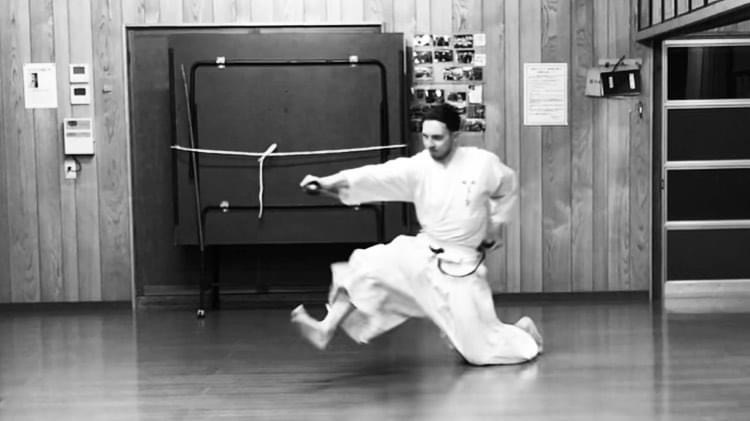
This set of techniques has been passed down from Jūshin sensei, and they were originally the first set learned in Jūshin Ryū. The 7th generation Hasegawa Chikaranosuke Hidenobu (Eishin) was a master of these techniques, so the school subsequently was called Hasegawa Eishin Ryū by successive generations. This set is predominantly performed from the tatehiza kneeling position:
•Yokogumo •Toraissoku •Inazuma •Ukigumo •Yamashitakaze •Iwanami •Urokogaeshi •Namigaeshi •Takiotoshi •Nukiuchi
◼︎Iai Kokoromochi no Koto
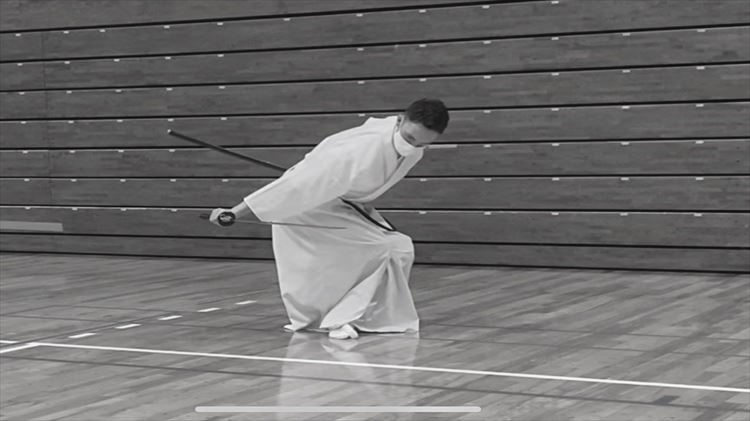
This set consists of teachings devised to respond to a variety of situations, where the focus is less on the form and more on the rapid execution of the technique. They are often referred to as the okuden [inner transmission] and are a combination of seated and standing techniques:
•Mukōbarai •Tsukadome •Mukōzume •Ryōzume •Sankaku •Shikaku •Torabashiri / •Jinchū •Yukitsure •Tsuredachi •Yukichigai •Yorunotachi •Oikakegiri •Gohōgiri •Katajū •Hanashiuchi •Nukiuchi •Yuruminuki
◼︎Tachiuchi no Waza
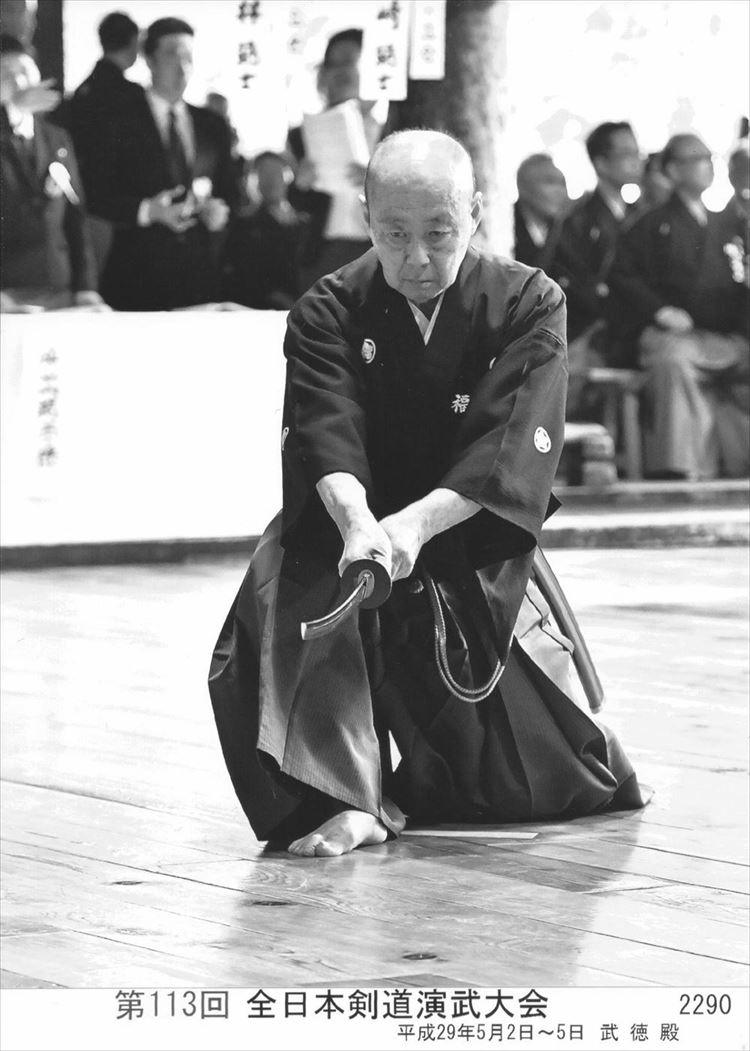
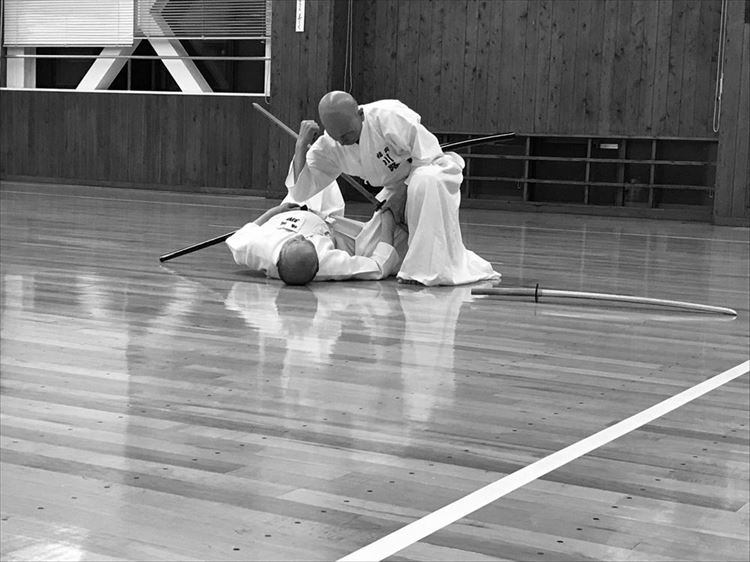
These are two-person techniques where Uchitachi and Tsukaikata roles use wooden swords to perform standing iai techniques:
•Deai •Tsukeiri •Ukenagashi •Ukeiri •Tsukikage •Suigetsutō •Dokumyōken •Zetsumyōken •Shinmyōken •Uchikomi
◼︎Tsumeai
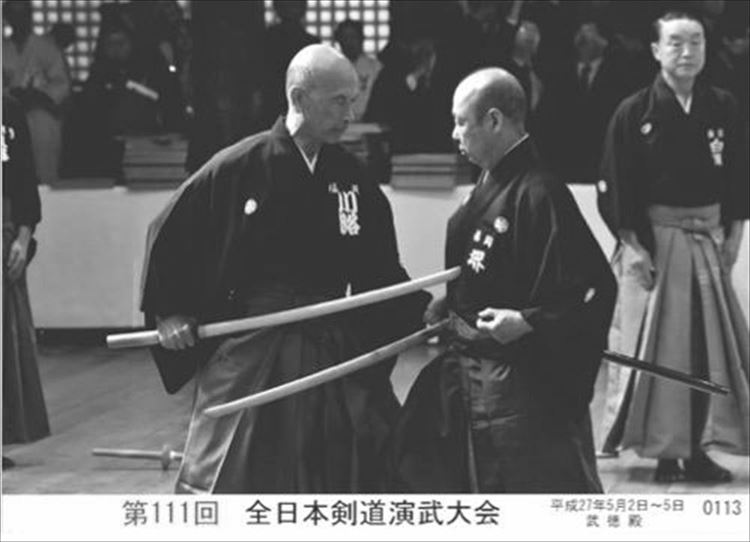
These two-person techniques are predominantly performed from tatehiza and are said to contain many of the school’s innermost teachings:
•Hassō •Kobushitori •Iwanami •Yaegaki •Urokogata •Kuraiyurumi •Tsubamegaeshi •Tsukakudaki •Suigetsu •Kasumiken
There are also a plethora of martial tactics and other philosophical teachings taught within our school.
抜刀兵法傳来
Lineage
Tenshinshō Hayashizaki Myōjin
Founder: Hayashizaki Jinsuke Minamoto no Shigenobu (Jūshin)
•Tamiya Heibei no Jō Narimasa
•Nagano Muraku Nyūdō Kinrosai
•Dodo Gunbei no Jō Mitsushige
•Arikawa Shōzaemon no Jō Munetsugu
•Banno Danuemon no Jō Nobusada
•Hasegawa Chikaranosuke Hidenobu (Eishin)
•Arai Seitetsu Kiyonobu
•Hayashi Rokudayū Morimasa
•Hayashi Yasudayū Masatomo
•Ōguro Motouemon Kiyokatsu
•Matsuyoshi Sadasuke Hisamori
•Yamakawa Kyūzō Yukimasa
•Tsubouchi Seisuke Chōjun
•Shimomura Moichi Sadamu
•Shimamura Umanojō Gikyō
•Hosokawa Zenma Gishō
•Nakayama Yūshin Hakudō
•Kimura Shinshin Eiju
•Kimura Ugakusai Shigeki / Nukata Hisashi / Hashimoto Masatake
Founder: Hayashizaki Jinsuke Minamoto no Shigenobu (Jūshin)
•Tamiya Heibei no Jō Narimasa
•Nagano Muraku Nyūdō Kinrosai
•Dodo Gunbei no Jō Mitsushige
•Arikawa Shōzaemon no Jō Munetsugu
•Banno Danuemon no Jō Nobusada
•Hasegawa Chikaranosuke Hidenobu (Eishin)
•Arai Seitetsu Kiyonobu
•Hayashi Rokudayū Morimasa
•Hayashi Yasudayū Masatomo
•Ōguro Motouemon Kiyokatsu
•Matsuyoshi Sadasuke Hisamori
•Yamakawa Kyūzō Yukimasa
•Tsubouchi Seisuke Chōjun
•Shimomura Moichi Sadamu
•Shimamura Umanojō Gikyō
•Hosokawa Zenma Gishō
•Nakayama Yūshin Hakudō
•Kimura Shinshin Eiju
•Kimura Ugakusai Shigeki / Nukata Hisashi / Hashimoto Masatake